Converters
Roman numerals explained
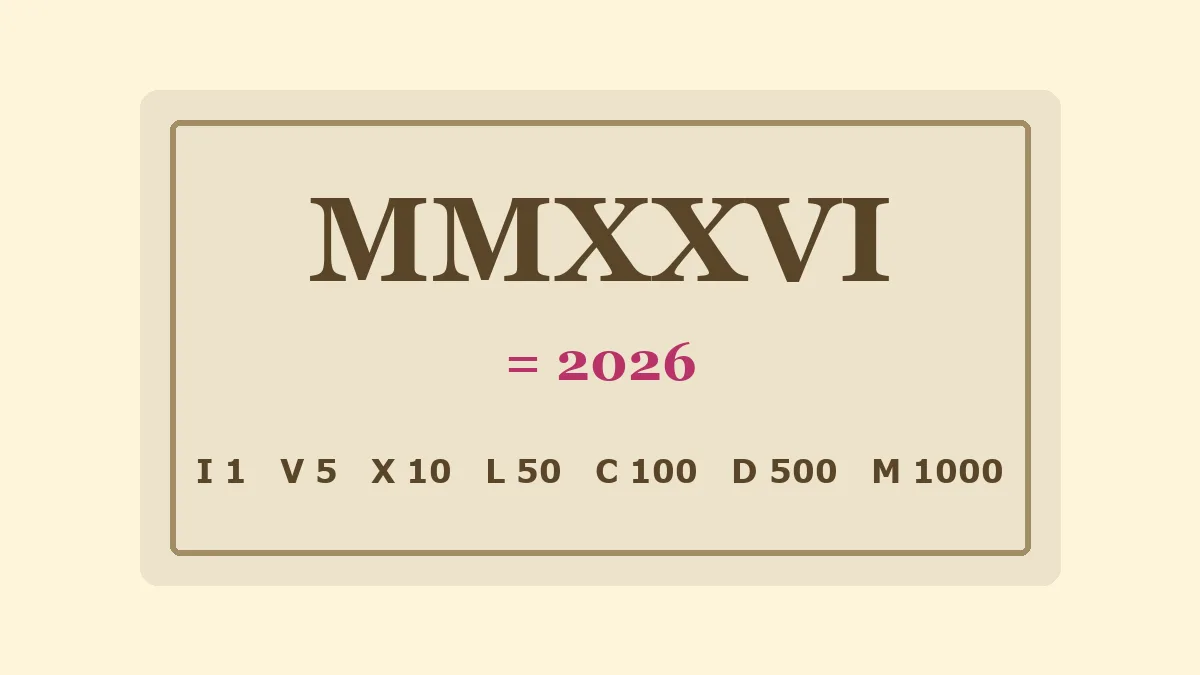
Roman numerals are older than zero, older than the decimal point and still on clock faces, film credits, book chapters and Super Bowl logos. Reading them takes just two rules.
The seven symbols
I = 1, V = 5, X = 10, L = 50, C = 100, D = 500, M = 1,000. A memory aid: "I Value Xylophones Like Cows Do Milk".
Rule 1: big to small, add
When symbols go from largest to smallest, add them. MDCLXVI = 1,000 + 500 + 100 + 50 + 10 + 5 + 1 = 1,666. A symbol can repeat up to three times: III = 3, XXX = 30.
Rule 2: small before big, subtract
A smaller symbol written before a larger one is subtracted. Only six pairs are allowed:
- IV = 4 and IX = 9
- XL = 40 and XC = 90
- CD = 400 and CM = 900
So 99 is XCIX (90 + 9), not IC. Only I, X and C are ever subtracted, and only from the next two symbols up.
Reading a year
Split the numeral into thousands, hundreds, tens and ones. MCMXCIX = M (1,000) + CM (900) + XC (90) + IX (9) = 1999. A plaque reading MDCXXXII works the same way: M + D + C + XXX + II = 1632.
Writing a number
Do the reverse, place by place. For 2026: 2,000 = MM, 0 hundreds = nothing, 20 = XX, 6 = VI. So MMXXVI.
Where you still see them
- Clock and watch faces
- Monarchs and popes: Charles III, Elizabeth II
- Book prefaces (page i, ii, iii) and outlines
- Film copyright years and sporting events
Why we stopped using them
Try multiplying XLVII by XIX. Without place value or a zero, written calculation is painful, which is why the Hindu-Arabic numerals we use today, with digits 0 to 9, took over in Europe from the 13th century onwards.
More explainers
 DatesCalendar maths: counting days, weeks and agesWhy counting days between dates trips people up, the "fencepost" problem, how leap years work, and quick methods for ages and countdowns.
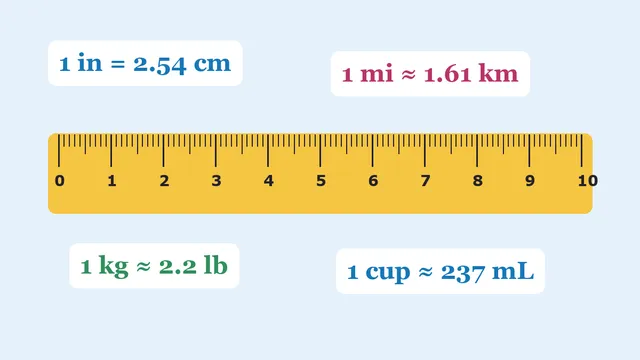 ConvertersUnit conversion without mistakesLearn the "multiply by one" method for unit conversions, the metric prefixes, key US-metric links and how to convert squared and cubed units correctly.
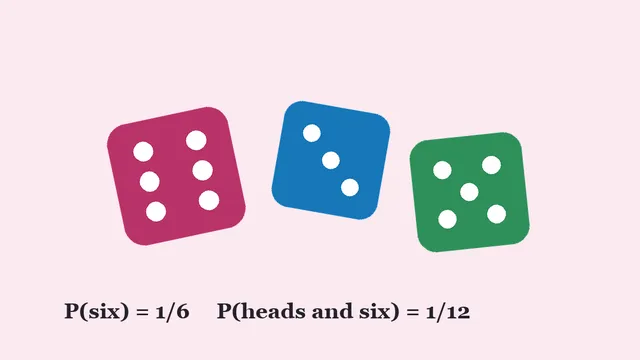 ChanceProbability basics with dice and coinsLearn probability with dice and coins: favourable over total outcomes, and versus or, the complement trick, independent events and the gambler's fallacy.