Chance
Probability basics with dice and coins
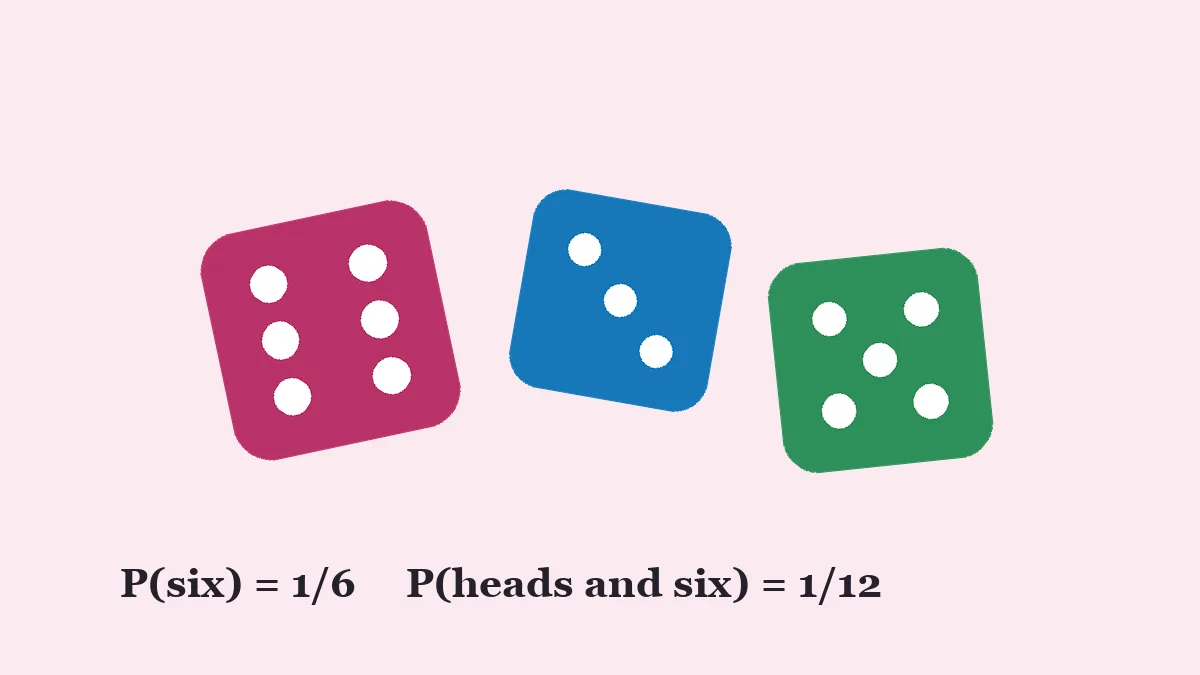
Probability is the maths of "how likely". It runs weather forecasts, medical tests, insurance and every board game you have ever played. The core idea fits on one line.
Favourable over total
Probability = number of ways it can happen ÷ total number of equally likely outcomes. A dice has 6 faces, and one of them is a six, so P(six) = 1/6. Three faces are even (2, 4, 6), so P(even) = 3/6 = 1/2.
Probabilities run from 0 (impossible) to 1 (certain), and are often written as percentages: 1/2 = 50%.
"And" means multiply
For independent events, where one does not affect the other, multiply. The chance of a coin landing heads and a dice showing six is 1/2 x 1/6 = 1/12. You can check by listing all 12 equally likely pairs (H1, H2 ... T6): only H6 works.
"Or" means add, then fix the overlap
The chance of heads or a six is not 1/2 + 1/6, because that counts H6 twice. Subtract the overlap: 1/2 + 1/6 - 1/12 = 7/12, about 58%.
The complement trick
"At least one" questions are easiest backwards. What is the chance of at least one six in four rolls? The chance of no six in one roll is 5/6, so in four rolls it is (5/6)⁴ ≈ 0.482. Therefore at least one six ≈ 1 - 0.482 = 0.518, just better than even. This exact puzzle was posed to the mathematician Blaise Pascal in the 1600s.
Dice have no memory
After five heads in a row, many people feel tails is "due". It is not: the next toss is still 50-50, because the coin does not know what happened before. This mistake is called the gambler's fallacy. Long-run averages even out because of the huge number of future tosses, not because the coin corrects itself.
Two dice, eleven totals
Rolling two dice gives 36 equally likely pairs but only 11 possible totals (2 to 12), and they are not equally likely. A total of 7 can happen 6 ways (1+6, 2+5, 3+4, 4+3, 5+2, 6+1), so P(7) = 6/36 = 1/6, while a total of 2 can only happen one way, 1/36. That is why 7 is the most common roll in so many games.
More explainers
 DatesCalendar maths: counting days, weeks and agesWhy counting days between dates trips people up, the "fencepost" problem, how leap years work, and quick methods for ages and countdowns.
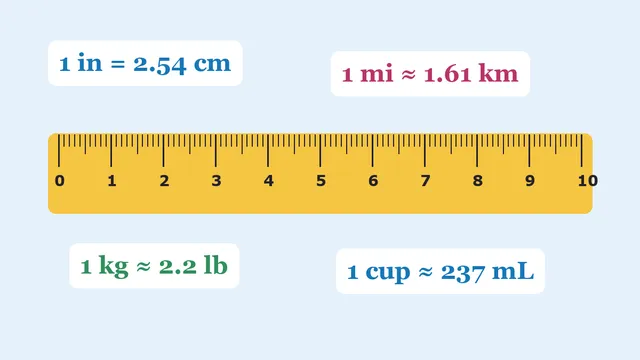 ConvertersUnit conversion without mistakesLearn the "multiply by one" method for unit conversions, the metric prefixes, key US-metric links and how to convert squared and cubed units correctly.
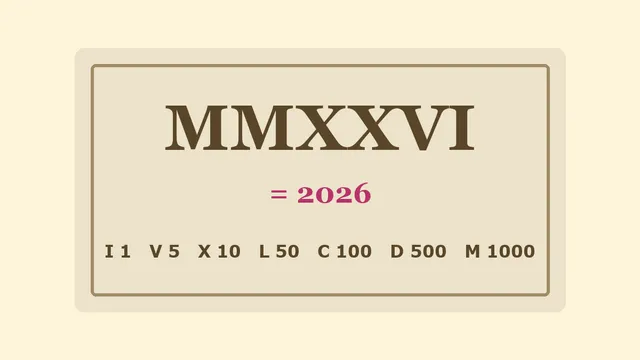 ConvertersRoman numerals explainedHow Roman numerals work: the seven symbols, adding and subtracting, the six subtraction pairs, reading years like MCMXCIX and where Roman numerals still appear today.